Showing posts with label Common Rosefinch. Show all posts

Sunday, 17 March 2019

Shetland (the Tengmalm's Owl Dip) - 4th-5th March

With some gripping photographs emerging on social media of the recent Tengmalm's Owl at Bixter on Mainland Shetland from 19th to 23rd February and then moving a short distance to Tresta from 24th and showing exceptionally well on 2nd March, I just had to go. So, with agreement from Sarah and with the bird showing well still on Saturday 2nd I hatched a plan to head to Shetland on Monday 4th. Booking my flights by mid-morning on 2nd I watched with some envy as mega images and video flooded from Lea Gardens the owls chosen patch of trees at Tresta. Sunday 3rd was a horrendous day with strong winds and torrential rain and so I was not too surprised that there were no reports of the bird - although I was somewhat nervous given the lack of any sightings. On the 4th I was up at 02:00 and at Heathrow by 04:00 ready for my 06:15 flight to Glasgow and on to Sumburgh. Landing at 11:35 I switched my phone on hoping to see news of the bird but nothing, just a message from Birdguides with a sad-faced emoji symbol. I collected my car and headed north-west in the hope that positive news would appear but it was not to be. On arrival at the site I met with Max Hellicar who had been at the site for a couple of hours looking for the bird. I had communicated with Max before arriving on the island and had arranged to bird with him for a couple of days as he was car-less for his time on the island. Max and I spent the next couple of hours scouring all the bushes we could, no accessible cluster of branches or leaves, no evergreen shrub and no conifer went unchecked but to no-avail.

After we had tired of peering into bushes we decided to take a break and head south for a tick for Max, the long staying Pied-billed Grebe at Loch Spiggie, a bird that I had last seen on 5th October 2018. From the southern end of the Loch we scanned vut could not located the grebe but did record good numbers of Goldeneye, Wigeon, Teal, Tufted Duck, a total of 23 Whooper Swan and four summer plumaged Red-throated Diver. We then headed to the north-west corner of the loch where Max's friends had seen the bird a few days ago. Pulling up in a lay-by close to the loch, Max was quick to locate the bird close to the shoreline. We hopped over the style and wandered to the waters edge but the grebe was very wary and swam to the centre of the loch, often partly submerged to avoid detection.

We then headed north pausing at Setter to scan the Greylag Goose flocks for two Bean Goose that had been present but we both felt a little half hearted, keen to get back to Lea Garden to look for the Tengmalm's Owl. We briefly paused at Cunningsburgh where a wintering juvenile Common Rosefinch, which has been present since 6th January,  showed quickly amongst its adopted flock of House Sparrow in the local gardens. After getting our fill of this rather drab bird with a simple-looking expression we continued north to our main target.

We stopped in the tall pine trees in the vicinity of the Methodist Church at Tresta peering into the tall pines here and working the bushes along the Burn of Tresta. A Woodcock was flushed as was a flock of 23 Collared Dove but little else was seen and certainly no owl. We then headed back to the garden and began peering into bushes until dark hoping to see the owl as it emerged from roost, but there was nothing, all was quiet and pretty down-heartening but tomorrow was to be another day.

Pied-billed Grebe (adult summer) - Loch of Spiggie

Pied-billed Grebe (adult summer using evasion tactics) - Loch of Spiggie, Mainland Shetland

Common Rosefinch (juvenile) - Cunningsburgh, Mainland Shetland 

Common Frog - Lea Gardens, Tresta, Mainland Shetland

Day 2 dawned bright and early and having checked out of the Lerwick Hotel I collected Max from the Islesburgh House Hostel just up the road from my hotel at 06:15. We headed directly to Lea Gardens full of optimism - a new day, a new dawn. We began peering into the bushes, starting in the central garden area where the bird had favoured the previous days but nothing. And then an owl flew over my shoulder and in the very brief glimpse I had I thought that it was probably a Short-eared. Calling Max he said he had just flushed a Long-eared Owl and so this was very likely his bird. I flushed the bird a couple more times as I searched through various trees and bushes and that was all the excitement there was. Time passed by and our spirits began to wain, more birders turned up, we now numbered seven. We hatched a plan to head to Bixter, and to the garden where the Tengmalm's Owl had originally been seen. Loading the car with a couple more birders we headed off on the five minute drive to the garden. I knocked on the door but the daughter of the owner of the property declined us access to the garden and so we searched the pines from the boundary of the garden. Max and I saw a Sparrowhawk fly off from the garden, it was carrying prey and both Max and I thought that it was most likely a Water Rail. Searching the perimeter pine trees my levels of despondency increased and suddenly the realisation of the dip tipped me over the edge, I had had enough and wanted to go and do something else. Max took a bit more convincing but eventually we headed back to Tresta, dropped the other birders off and headed north-east to Bretabister and Nesting where a White-billed Diver had been present. 

We scanned the sea and had some nice views of Great-northern Diver as well as distant views of Red-throated Diver, Slavonian Grebe, Red-breasted Merganser and Guillemot and a school of five Common Porpoise but no White-billed. Time was pushing on and I had in mind my flight back south, so we headed down to Lerwick and spent some time around Gremista. Max had purchased three loaves of bread to draw the gulls in but they didn't seem interested and it was comical watching Max throw the bread towards the sea just for the wind to send the bread back overhead and into the car park. Eventually, he generated some interest amongst the gull community and a 2nd winter Iceland Gull appeared and showed very well. Also offshore here were small numbers of Fulmar, Kittiwake and around four Long-tailed Duck and 12 Black Guillemot, some of the latter now in summer plumage. It was now 12:15 and time for me to head off south to Sumburgh for my 14:00 flight home, I said my goodbyes to Max who was on the boat to Aberdeen that evening. As I drove south I reflected on what had been a good couple of days birding but a major dip. This dip was probably second in stature to my missing a Wallcreeper in-off the sea at St. Catherines Point in the 80's (see here), that dip still haunts me even though I have now seen Wallcreeper. The Wallcreeper dip eclipses the Tengmalm's Owl by a long way but the owl still hurt, and will hurt in the future, such are the highs and lows of birding - thats why I love it and live for it.

Oystercatcher - South Nesting, Mainland Shetland

Long-tailed Duck (adult male, winter plumage) - Gremista, Lerwick, Mainland Shetland

Iceland Gull - Gremista, Lerwick, Mainland Shetland

Iceland Gull - Gremista, Lerwick, Mainland Shetland

Iceland Gull - Gremista, Lerwick, Mainland Shetland

Tuesday, 2 October 2018

Shetland Mainland - 2nd October

I was up at 02:00 today, my alarm was set for 03:00 but I just could not sleep. So at 03:00 I set off for Heathrow Airport for my 07:05 flight to Aberdeen and on to Shetland. I had been looking forward to this trip for some time but my constant reviewing of the weather did not bode well with pretty much constant west or north-west winds forecast - Shetland had been very quiet of late. I relaxed in the lounge at Heathrow before my flight and boarded on time but just at departure time it was announced that some numb-nut had decided he/she did'nt want to fly and the baggage staff had to remove his/her bags, this delayed our departure by 30 minutes. My transfer in Aberdeen was incredibly tight and I had fears for my checked in bag so my intuition told me to check with the stewardess and the backage handlers and my fears were confirmed, my bag was not on the plane from Aberdeen to Sumburgh. Now, this had happened to me before and I spent eight days on Fair Isle and Shetland with no luggage and I was not hapy with facing this once again.

The plane landed at Sumburgh pretty much on time at 10:30 and I filed a lost baggage claim and then picked up my car from Bolts Car Hire. The weather was terrible with F7-8 winds and heavy squally showers and so, with no kit, I decided to head to Lerwick to buy a coat, wellies and waterproof trousers. Then, what to do, it was so windy that the birding was going to be difficult so I decided to try and clear up on the few scarce species that were around. First I headed to Boddam for a Scarlet Rosefinch but I was unsuccessful probably mainly due to the atrocious conditions but I did see a pair of rather nice, dark and chunky, North-western (rostrata) type Common Redpoll, presumably from Iceland, Greenland or thereabouts as the wind has been blasting from that direction for sometime. Other than this, it was pretty thin with only 10 Teal and 15 Pink-footed Goose in off the sea of any note.

I then headed to Sumburgh Head and spent the next two hours trying to see a Marsh Warbler in an exposed quarry in a howling gail. After ducking a good number of heavy showers and falling asleep in the car I managed to achieve brief flight views of the bird - the tone of its plumage distinctive but far from adequate looks of this bird. Also here was a single Wheatear sheltering from the gales.

I then headed to Grutness for Snow Bunting and Lapland Bunting but other than a Great Skua, Kittiwake and an adult Arctic Tern I saw nothing and dipped both bunting.

My bag situation was starting to eat me up, with plans of a trip to Tesco to buy a tooth-brush and pants, so I decided to head for the airport and put up a 'fight' for my bag but as I walked in the first thing I saw was my bag. I could at last relax and my plans of buying a tooth-brush and pants changed to heading to Tesco a little later to buy a bottle of red wine!

It was now 16:30 and so I decided to head back to Boddam to try for the Common Rosefinch but had no success. The highlight, while dodging the showers, was a flock of eight Twite and a flock of round 75 Golden Plover. Somewhat annoyed by, once again, dipping the Rosefinch, I headed to Southwick and the beach at Leebitten where another rosefinch was present. I wandered around in the gale photographing an Eider and then eventually bumped into the Common Rosefinch feeding on the Orache and Perennial Sow-thistle along the shoreline. It was somewhat elusive in the strong winds but eventually showed moderately well. A Merlin performed over the settlement and eventually flew south and I decided it was time to head for the Lerwick Hotel, my accomodation for the next couple of nights. I was knackered.

Common (North-western rostrata type) Redpoll - Boddam, Shetland

Common (North-western rostrata type) Redpoll - Boddam, Shetland

Common (Greenland type) Redpoll - Boddam, Shetland

Northern Wheatear - Sumburgh, Shetland

Great Skua - Sumburgh, Shetland

Kittiwake - Sumburgh, Shetland

Common Eider - Leebitten near Southwick, Shetland

Common Rosefinch - Leebitten near Southwick, Shetland

Saturday, 20 May 2017

Mongolia - 20th May (Day 13) - Hustai National Park to Terelj National park

We awoke at the research station at Hustai National Park to a strange light, much to our surprise there had been overnight snow fall and the snow was still falling. Chough were calling around the accommodation and the outside toilet facilities were snow filled and not functional. Barry, Richard and I headed out into the snow to look for birds – the Chough dug in the snow for sustenance and the Tree Sparrows scrapped around under the buildings. I wandered up a steep valley opposite the accommodation while Richard and Barry walked along the valley leading from the accommodation. I was stunned by the number of birds I encountered, the snow had clearly resulted in a fall. In the first bush I came to there were six Siberian Rubythroat, then four Eye-browed Thrush, a Cuckoo and a Hobby in the snow, Arctic Warbler, Pallas’s Warbler, Brown Shrike, Little Bunting and Black-faced Bunting – all sheltering in scraps of vegetation. After a quick coffee back at the accommodation, I joined Barry and we walked up the valley that ran away from the accommodation and that he had birded earlier, we added more species to the list, Common Redstart, Daurian Redstart, White’s Thrush, a male Siberian Blue Robin, Meadow Bunting, Dusky Warbler, Siberian Chiffchaff, Taiga Flycatcher and best of all, a stunning male Yellow-breasted Bunting. The commonest birds were Arctic Warbler, Taiga Flycatcher and Siberian Rubythroat with 10’s of each species in the small area that we had birded, the bushes were hoping with birds – this was perhaps the most exciting birding that Barry and I had experienced and at 10:00 we were very reluctant to leave.

A bed at last - Hustai National Park

View from our window

The view that awaited us - Hustai National Park

I birded the small valley that runs away from the toilet block - Hustai National Park

Our accomodation- Hustai National Park

The morning washing facilities - Hustai National Park

 Hustai National Park

 Hustai National Park

 Hustai National Park

This valley was alive with birds after the snow fall - Hustai National Park

Chough foraging in the snow - Hustai National Park

Chough in our bathroom - Hustai National Park

Chough - Hustai National Park

Eurasian Cuckoo - Hustai National Park

Siberian Rubythroat - Hustai National Park

Breakfast - Hustai National Park

Yellow-breasted Bunting - Hustai National Park

Yellow-breasted Bunting - Hustai National Park

Barry - Hustai National Park

Arctic Warbler - Hustai National Park

Taiga Flycatcher - Hustai National Park

Arctic Warbler - Hustai National Park

Arctic Warbler - Hustai National Park

Arctic Warbler - Hustai National Park

Daurian Redstart - Hustai National Park

Hobby - Hustai National Park

Hobby - Hustai National Park

Brown Shrike - Hustai National Park

Daurian Redstart - Hustai National Park

Taiga Flycatcher - Hustai National Park

 Hustai National Park

Barry - Hustai National Park

Taiga Flycatcher - Hustai National Park

Taiga Flycatcher - Hustai National Park

Arctic Warbler - Hustai National Park

Black-eared Kite - Hustai National Park

Arctic Warbler - Hustai National Park

Pallas's Warbler - Hustai National Park

Eye-browed Thrush - Hustai National Park

Heading back through the park towards the park gate we dropped below the snow line, a few stops to bird scrub patches produced further migrants, another Eye-browed Thrush, White’s Thrush, 15 Meadow Bunting, Wryneck and more Siberian Rubythroat, Arctic Warbler, Little Bunting and Taiga Flycatcher. We stopped for a small group of Przewalski's Horse, while meant to be the stars of the site, were pretty dull in comparison to the bird activity despite their rarity. At the park gate a Siberian Rubythroat foraged amongst the litter while an Asian Brown Flycatcher was new for the trip.

 Hustai National Park

Meadow Bunting - Hustai National Park

Eye-browed Thrush - Hustai National Park

Taiga Flycatcher - Hustai National Park

Mongolian Marmot - Hustai National Park

Przewalski's Horse - Hustai National Park

 Hustai National Park

Asian Brown Flycatcher - Hustai National Park

Asian Brown Flycatcher - Hustai National Park

Tree Sparrow - Hustai National Park

Lesser Kestrel - Hustai National Park

Heading out of the park and back through Ulaanbataar a surprise stop at a Korean restaurant for lunch produced an absolute taste sensation after the last few days cooking which, while tasty and miraculously conjured in the back of the support vehicle, lacked spice and variety. Meanwhile Richard birded the riverine scrub seeing more migrants and a rather gripping Azure Tit.

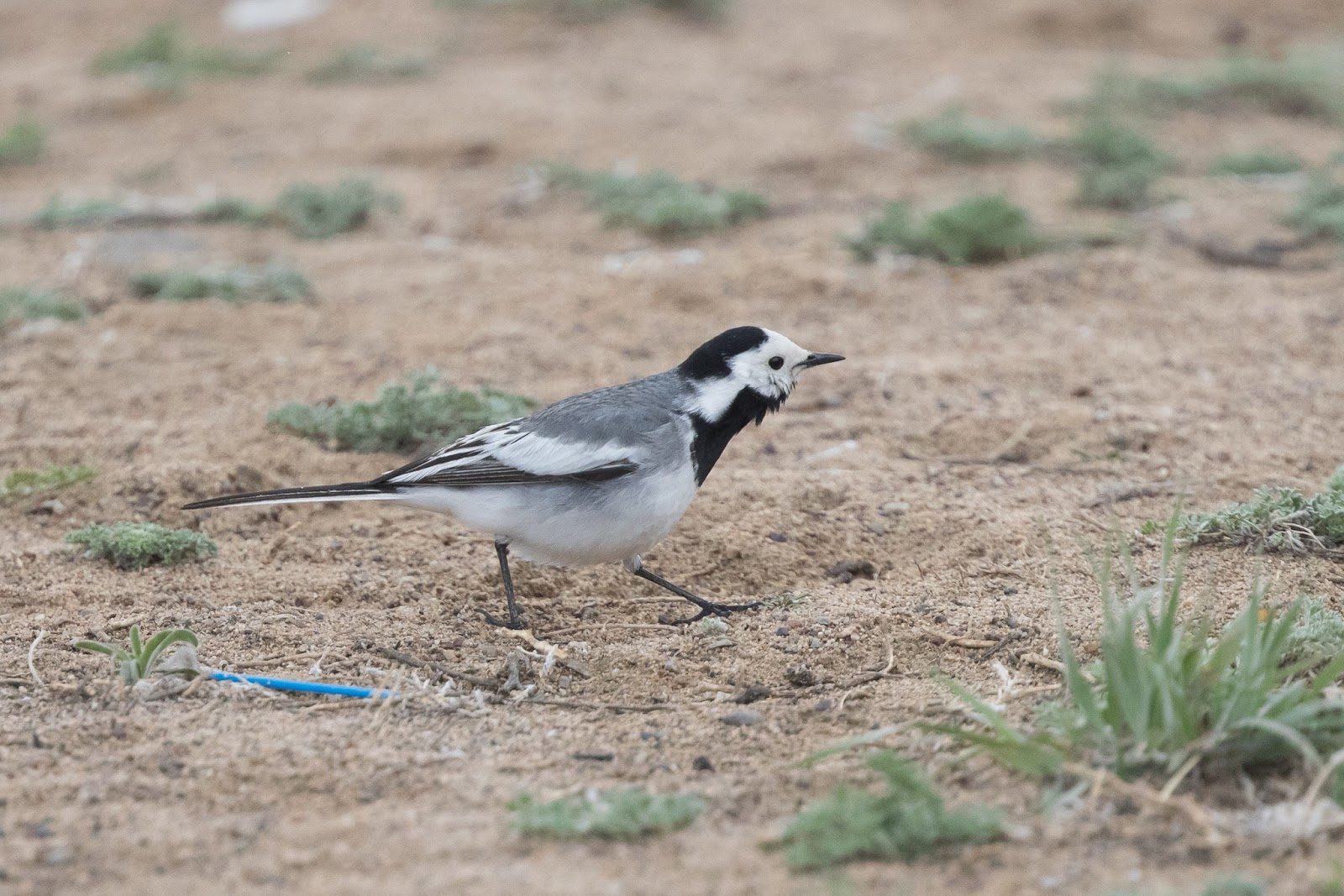
White Wagtail of subspecies baicalensis - Ulaanbataar

White Wagtail of subspecies baicalensis - Ulaanbataar

Suburbs of Ulaanbataar

Suburbs of Ulaanbataar

Suburbs of Ulaanbataar

After Ulaanbataar we headed to Terelj National Park enjoying the spectacular scenery in an area which was clearly popular as weekend retreat for Ulan's population. Stopping at a small area of Oak dominated woodland we saw Pine Bunting and Hawfinch before heading on to our hotel. In the car park of the hotel we were attracted to the garbage dump where Daurian Jackdaw, Brown ShrikeCommon RosefinchSiberian RubythroatBrown Shrike and a single Dusky Thrush entertained us. The Ulaanbaatar Hotel 2 was quite a welcome site, we knew that beds and showers awaited us, but this was clearly quite a tired hotel with rather crumbling facade and austere staff. We checked into its rather frigid rooms and were quite pleased to head into the nearby forest. Walking across the bridge from the hotel we had superb views of Goosander and in the forest enjoyed great views of Eurasian Nuthatch of the pallid race baicalensis. A small damp area produced around 20 Siberian Rubythroat and a pair of Siberian Blue Robin, the male of which showed particularly well but there was no hoped for White-backed Woodpecker. A bland dinner at the hotel was followed by a much needed sleep in a bed.

Outskirts of Terelj National Park

Terelj National Park

Terelj National Park

Siberian Rubythroat - Terelj National Park

Common Rosefinch - Terelj National Park

 Brown Shrike - Terelj National Park

Daurian Jackdaw - Terelj National Park

Dark phase Daurian Jackdaw - Terelj National Park

Eurasian Nuthatch of subspecies baicalensis - Terelj National Park

Presumed Common Snipe - Terelj National Park

Siberian Blue Robin - Terelj National Park

Siberian Blue Robin - Terelj National Park

Siberian Blue Robin - Terelj National Park

Siberian Blue Robin - Terelj National Park

Siberian Rubythroat - Terelj National Park

Carrion Crow and Black-eared Kite - Terelj National Park

Terelj National Park

Links to Other Days of the Trip (Click to View)
Day 1 and 2 – International flight then Ulaanbaatar to Mungum Sum
Day 3 -  Mungunmorit and Gachuurt area
Day 4 - Drive to Dalanzadgad
Day 5  – Gurvan Saikhan National Park
Day 6 - Gurvan Saikhan National Park
Day 7 - Gobi Desert and Khongor Sand Dunes
Day 8 – Gobi Desert to Bogd
Day 9 - Baga Bogd Mountain and Kholboolj Lake
Day 10 - Kholboolj Lake and Barig Mountain
Day 11 - Barig Mountain and Sangiin Lake
Day 12 (Part 1) - Sangiin Lake and Bayan Lake
Day 12 (Part 2) - Sangiin Lake and Bayan Lake
Day 14 - Terelj National Park and Gachuurt Area
Day 15 and 16 - Gachuurt Area, Tuul River and International flight