I had long wanted to visit Taiwan for its range of fantastic endemic species and so when Ian Merrill offered me a place on a trip in early 2019 I jumped at the chance. The itinerary also included South Korea which I had not really considered previously and there were few ticks here but the birding here proved fantastic and I thoroughly enjoyed my time. Our team consisted of Ian, Andy Deighton and Trevor Codlin.
Logistics
For the South Korea part of the trip we used Niall Moores of Birds Korea , Niall is the main birding guide for the country. Niall is British and has spent many years living and working in South Korea. He can be contacted at nial.moores@birdskorea.org. We had booked Niall early in 2019 to secure his time as he also leads for a number of tour companies. Niall arranged all the hotels and car hire and dealt with all the logistics, I did much of the driving which was pretty straightforward. Personally, I wouldn't want to tackle South Korea without a guide although I am sure it is possible, the road networks are complex and constantly changing, English is not widely spoken and many of the birding sites require fairly specialist local knowledge to access. Niall's account of our trip can be viewed here.
For Taiwan we had sought a guide for the duration but the main guide we wanted to use, Richard Foster of Taiwan Birding, was out of the country guiding in Sri Lanka. However, we did contact Richard during our trip for some advice on finding specific key birds and he was very helpful. Richards email is info@birdingattaiwan.com and I would suggest that if you are arranging a trip and require a guide that you contact him well in advance. We explored a number of other guides, some helpful some not so and one in particular was extortionately expensive. Ultimately we opted to arrange the trip ourselves, like many others do, and we had no major problems doing so. Ian prepared the itinerary, booked most of the hotels and arranged the car hire while I did all of the driving and Google (assisted by Andy) did the navigating. While, at times, there was a language barrier this was an easy country to self-guide in.
Weather
The weather in South Korea was largely cold and overcast with some brighter spells. The 30th and 31st were largely sunny and cold. Temperatures were in the region of 6c during the day and in the low minus figures at night.
In Taiwan we largely birded at mid to high altitudes and so the temperatures were naturally lower. At the higher elevations at Wushe the temperature was around 2c with a strong wind blowing, while at Kenting National Park and Pungtung in the south the temperature was around 26c. There was no significant daytime rain but on the night of 4th there was heavy overnight rain that had cleared by dawn.
Annoyances
There were very few annoyances apart from the outbreak of the novel coronavirus (COVID-19), a new strain of coronavirus which was first identified in Wuhan City, China. But despite South Korea and Taiwan being identified by the UK Government as high risk areas we were largely in relatively remote areas away from populated areas and so had little impact on our behaviour although we did notice an increase in surgical masks being worn.
Equipment
I took with me my Olympus kit with the OMD EM1X and EM1 Mark II camera, 300 F4 lens, 40-150mm F2.8 lens and 1.4 converter. I mainly used the 300mm as birds were generally mid-distance. The 40-150mm was used on a couple of occasions but I could have made do without it. Scopes were essential in South Korea but of relatively limited use in Taiwan.
Itinerary
South Korea
- 26th January (Day 1) – Flight LHR (09:00) arrive Charles de Gaul 11:25, depart 13:10.
- 27th January (Day 2) – Arrive Seoul 08:10 then drive to Han River, Paldang and then on to Songdo Park, Incheon. Night in Incheon.
- 28th January (Day 3) – Songdo Tidal Flats, Incheon AM then on to Korea National Arboretum and Forest Museum, Pocheon City then drive to Seosan. Night in Seosan.
- 29th January (Day 4) – All day Seosan Reclamation covering Areas A and B. Night Seosan.
- 30th January (Day 5) – Seosan Reclamation Area A in the morning then Geum River, Seocheon PM. Night Gunsan.
- 31st January (Day 6) – Yubu Island, Geum Estuary. Gunsan AM then drive north to Han River, Chungju. Drive to Seoul and overnight.
- 1st February (Day 7) – Fly Seoul to Taipei then drive to Dasyueshan Forest Reserve, Taichung City. Night Dasyueshan Visitors' Centre.
- 2nd February (Day 8) – Dasyueshan Forest Reserve all day. Night Dasyueshan Visitors' Centre.
- 3rd February (Day 9) – Dasyueshan Forest Reserve all day. Night Dasyueshan Visitors' Centre.
- 4th February (Day 10) – Dasyueshan Forest Reserve all day. Night Dasyueshan Visitors' Centre.
- 5th February (Day11) – Dasyueshan Forest Reserve AM then drive to Huisin Forest Reserve. Night Huisin Forest Station.
- 6th February (Day 12) – Huisin Forest Reserve early Am then drive to Dizang Budhist Temple, Puli. PM drive to Ren'ai and bird Blue Gates Trail. Night Chingjing Maple Hill Hotel.
- 7th February (Day 13) – NTU Experimental Farm, Chung-yan AM then Song Shue Lodge, Hehuanshan National Forest Recreation Area and Blue Gates Trail PM. Night Chingjing Maple Hill Hotel.
- 8th February (Day 14) – Song Shue Lodge, Hehuanshan National Forest Recreation Area AM then drive to Firefly Lodge, Dingben PM. Night Firefly Lodge.
- 9th February (Day 15) – Alishan all day. Night in tourist village at Alishan National Forest Recreation Area.
- 10th February (Day 16) – Alishan AM then drive south to Kenting National Park PM and then onto Pintung University. Night Hakka Eco-farm.
- 11th February (Day 17) – Pingtung University AM then drive to Qingkunshen IBA, Jiangjun for late AM. PM drive to Taipei and international flight 00:20 on 12th via Amsterdam arriving London at 09:00 on 12th.
Map showing the key sites visited and species recorded during our trip. Zoom into map and click on pins for more details.
The alarm went off at 03:15 on 26th and after some last minute faffing I left home and met Trev at the Winchester Park and ride at 04:45. The drive to Heathrow Terminal 4 was very quick and by 6:05 we had parked, checked into our flight and met up with Andy and Ian. After passing through security we had breakfast and made our way to our departure gates. Our flight for Paris left on time at 09:00, once in Paris we passed through security and boarded our 13:10 flight to Seoul. We flew east over the Baltic and Estonia passing north of Moscow and then over the Ural Mountains, then to the north of Omsk before passing over northern Mongolia and Ulaanbaatar flew to the north of Beijing before crossing the sea to the Korean Peninsula and dropping into Seoul landing at 08:10 on 27th.
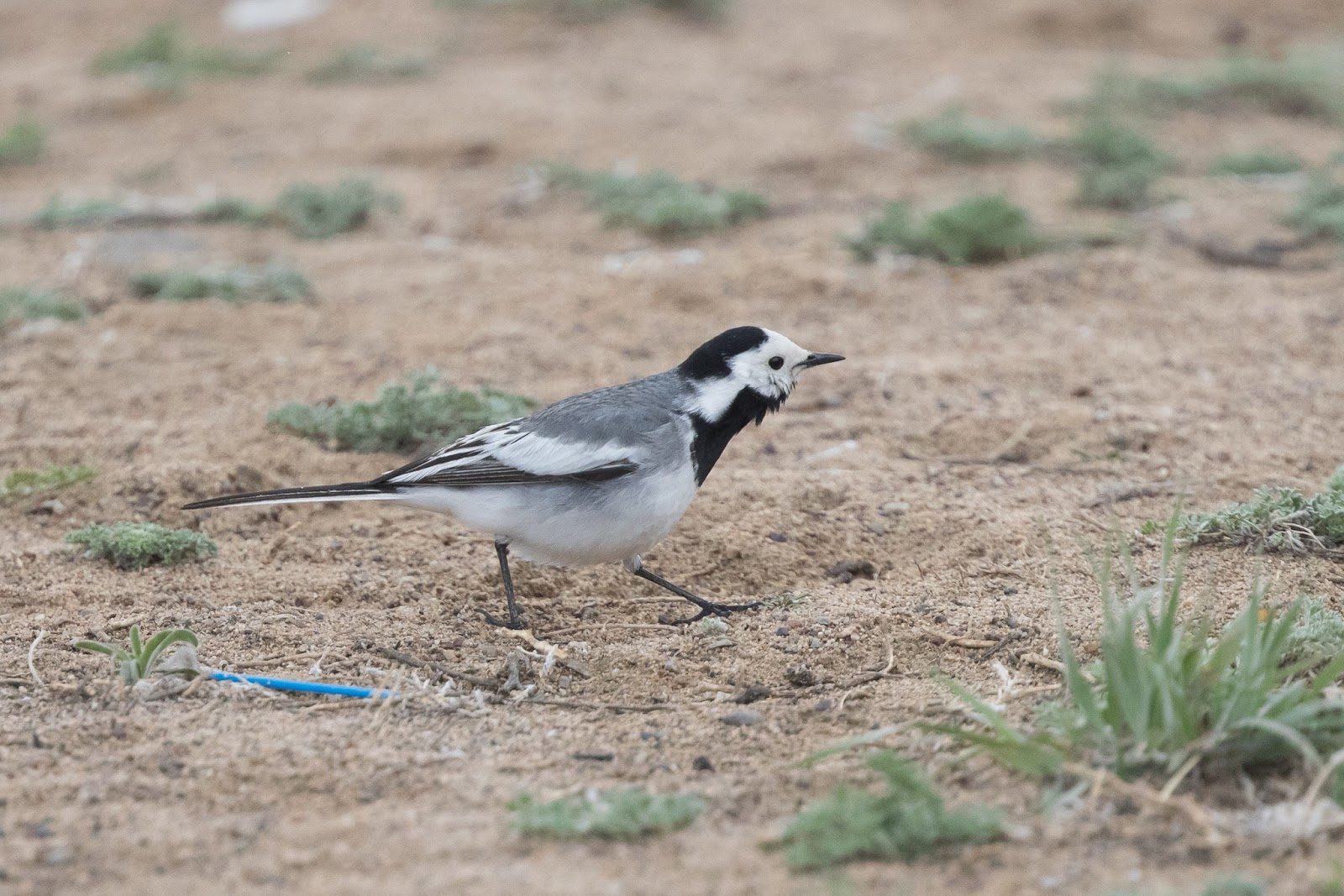
After collecting our Hyundai Starex mini-van we were on our way and straight onto the unnecessarily wide highways flanked by housing blocks that seem to typify this area of South Korea. The landscape was very parched and the country is experiencing an exceptionally mild and dry winter and where temperatures would normally be sub-zero, the landscape snow covered and the waterways frozen instead it is relatively mild and snow and ice free. We travelled east and headed to the east side of Seoul and to the town of Padang through which flows the Han River. After negotiating the tangle of backstreets which are intertwined with express ways we found the cycleway that we followed westwards along the river for a kilometre or so. The wide Han River was chock-a-block with birds with hundreds of Whooper Swan, Taiga Bean Goose, Goldeneye and Mallard with smaller numbers of Pochard, Eastern Spot-billed Duck, Little Grebe and Great Crested Grebe. The highlights on the river were two White-tailed Eagle and two male and a female Scaly-sided Merganser which were hunting using their distinctive snorkelling technique amongst the rocky areas of the river. On the rocks in the river was my first tick of the trip, Japanese Pied Wagtail, some of which were in song. While in the scrub flanking the cycleway we recorded Vinous-throated Parrotbill, Daurian Redstart, Meadow Bunting, Yellow-throated Bunting, Long-tailed Rosefinch, Brown-eared Bulbul and Naumann’s Thrush. My eBird checklist for the area can be viewed here.

Meadow Bunting - Han River, Paldang, South Korea

Meadow Bunting - Han River, Paldang, South Korea

Meadow Bunting - Han River, Paldang, South Korea

Taiga Bean Goose - Han River, Paldang, South Korea

Taiga Bean Goose and Whooper Swan - Han River, Paldang, South Korea

Whooper Swan - Han River, Paldang, South Korea

Naumann's Thrush - Han River, Paldang, South Korea

Marsh Tit- Han River, Paldang, South Korea

Oriental Greenfinch - Han River, Paldang, South Korea

Long-tailed Rosefinch - Han River, Paldang, South Korea

Scaly-sided Merganser - Han River, Paldang, South Korea

Daurian Redstart - Han River, Paldang, South Korea

Daurian Redstart - Han River, Paldang, South Korea

Vineous-throated Parrotbill - Han River, Paldang, South Korea


At around 14:45 we headed back west and into the sprawl of Seoul to Songdo Park in the District of Incheon. This peaceful park surrounded by residential tower blocks was currently supporting a Fieldfare, only the second record for South Korea and we soon saw this bird. However, for us the real highlight was a flock of around 150 Bohemian Waxwing with, mixed amongst their ranks, up to 18 Japanese Waxwing. This was one of the main species I wanted to see while in the country and they didn’t disappoint. Slightly smaller than the Bohemian Waxwing with an obvious yellow wash on the belly, red tail tip and the black eyestripe extending all the way along the rear edge of the crest to meet its tip – these were stunning little birds. Also in the park we enjoyed good views of Brambling, Naumann’s Thrush, Dusky Thrush, Brown-eared Bulbul and Japanese Tit. My eBird checklist for the area can be viewed here.

Bohemian and Japanese Waxwing - Songdo Park, Incheon

Bohemian Waxwing - Songdo Park, Incheon

Bohemian and Japanese Waxwing - Songdo Park, Incheon

Bohemian and Japanese Waxwing - Songdo Park, Incheon

Bohemian and Japanese Waxwing - Songdo Park, Incheon

Japanese Waxwing - Songdo Park, Incheon

Japanese Waxwing - Songdo Park, Incheon

Bohemian Waxwing - Songdo Park, Incheon

Japanese Tit - Songdo Park, Incheon

Brown-eared Bulbul - Songdo Park, Incheon

Naumann's Thrush - Songdo Park, Incheon
Links to Other Days of the Trip (Click to View)
South Korea
Taiwan