Showing posts with label Turtle Dove. Show all posts

Sunday, 16 October 2022

Shetland - 8th October

It was the Cornell/eBird October Big Day today and I intended to try and see as many species as possible in the south of the mainland - without going crazy! I began the day at one of my favourite spots on Shetland, Wester Quarff, and birded the lower road down to the voe and then back along the upper road. The conditions were relatively calm compared to recent days and the winds had dropped down to around F3-4 with some brighter spells. My expectations were high but there were few birds to be seen although two Yellow-browed Warbler in the same bush and the King Eider offshore were nice to see. I then headed back north to Gulberwick where the 'Hornemann's' Arctic Redpoll had been seen again this morning, there were a few Common Redpoll buzzing around and I had brief views of the Arctic Redpoll perched on a fence near to the main road but after this initial view the bird failed to show again. I then headed to Gott for a Turtle Dove, a Shetland tick, it took almost two hours to find and was eventually located perching motionless in a willow on the site. 

Shetland subspecies (zetlandicus) of Eurasian Wren - Wester Quarff

Turtle Dove - Gott

Heading back south I visited Hoswick and birded Swinster Burn and the Sycamores around the Orca Inn but saw little but for a Yellow-browed Warbler and a Common Redpoll. In need of seeing a good bird for the day, I headed back to Bigton and spend around an hour with the Yellow-rumped Warbler which showed well. The day was now drawing in and I headed for Geosetter for one last try at finding something rare myself with no luck. It was a good day but given the still conditions it was remarkable how few birds were around with very low numbers of common migrants.

Common Redpoll - Swinster Burn, Hoswick

Yellow-rumped Warbler - Bigton

Yellow-rumped Warbler - Bigton

Links to the Days eBird Checklists

Thursday, 23 May 2019

Martin Down and Bentley Wood - 23rd May

On a beautiful sunny morning I visited Martin Down National Nature Reserve primarily to see Burnt Orchid, now in its peak flowering period. Parking in the car park off the A354, on opening the car door I immediately heard the beautiful soft purring of a Turtle Dove, the bird showed well in the scrub adjacent to the car park as it sat atop a Hawthorn and undertook frequent display flights. From the car park I headed directly to the Bockerly Dyke and walked southwards. The sound of Corn Bunting, Sky Lark and Yellowhammer filled the air and my first Cuckoo called distantly. Butterflies were abundant with good numbers of Small Blue, Common Blue and Dingy Skipper and smaller numbers of Adonis Blue, Grizzled Skipper and Green Hairstreak. I soon reached the area for the Burnt Orchid and found around 10 nearly pristine examples. Wandering back towards the car I spent some time with the small colony of Marsh Fritillary that occur just north of the main mound of the firing range. I came across around 10 males and a freshly emerged female, these are stunning butterflies and one of my favourite British species.

Burnt Orchid - Martin Down NNR

Burnt Orchid - Martin Down NNR

Burnt Orchid - Martin Down NNR

Field Fleawort - Martin Down NNR

Crosswort - Martin Down NNR

 Grizzled Skipper - Martin Down NNR

Adonis Blue - Martin Down NNR

Green Hairstreak - Martin Down NNR

Marsh Fritillary - Martin Down NNR

Marsh Fritillary - Martin Down NNR

Turtle Dove - Martin Down NNR

Yellowhammer - Martin Down NNR

Yellowhammer - Martin Down NNR

Corn Bunting - Martin Down NNR

I then headed the short distance to Bentley Wood where I spent an hour or so in the Eastern Clearing. Here a very obliging and freshly emerged Small Pearl-bordered Fritillary was conspicuous amongst the more worn and more abundant (c.15) Pearl-bordered Fritillary. A couple of rather tatty Marsh Fritillary and a Grizzled Skipper were also present. However, the highlight was a stunning fresh Narrow-bordered Bee Hawk which showed very well, it appeared to have just emerged and spent some time perched low in the vegetation before vanishing at high speed and with a deep humming sound.

Small Pearl-bordered Fritillary - Eastern Clearing, Bentley Wood

Small Pearl-bordered Fritillary - Eastern Clearing, Bentley Wood

Pearl-bordered Fritillary - Eastern Clearing, Bentley Wood

Narrow-bordered Bee Hawk - Eastern Clearing, Bentley Wood

Wednesday, 16 May 2018

16th-18th May - Martin Down and Pennington Marsh

The last couple of weeks have been manic at work with some very early starts for breeding bird surveys, late nights reviewing documents and getting the company ready for the new and extremely tedious General Data Protection Regulations which come into force later in May. However, I have managed to get out a little to protect my sanity.

Note - I added a number of sound recordings to this post linked to uploads at the Internet Bird Collection (IBC). With the subsequent transfer of data from IBC to the Macaulay Library the links to these became broken. I have therefore subsequently uploaded these sound files to eBird and the recordings can be viewed here for Martin Down and here for Pennington Marsh. I have retained the sonograms from these recordings on this post.

On the morning of 16th May I visited Marin Down on the north Hampshire and Wiltshire border to complete my Nightingale survey as organised by the Hampshire and Isle of Wight Wildlife Trust, alas, there were no Nightingale. Martin Down has experienced a catastrophic fall in population from 24 singing males in 1980 to none now, there cannot have been a change in the extent of scrub, this is a National Nature Reserve and there has probably been an increase rather than a reduction in scrub cover. So surely this local and the national decline is linked to changes in the wintering grounds or something happening along the migration routes rather than localised habitat loss/change in the UK. Still, there were lots of Corn Bunting (at least 15 birds recorded) and the first Turtle Dove that I have seen in the UK for many years with at least six 'purring' birds. Here, also were an amazing density of Skylark and it was difficult to estimate the number of birds but my best guess was 30 birds in all. It was a little windy for butterflies and the only species I recorded was a single Green Hairstreak, my first of the year.

Corn Bunting - Martin Down, Hampshire

Corn Bunting - Martin Down, Hampshire

Turtle-dove - Martin Down, Hampshire

Green Hairstreak - Martin Down, Hampshire

Invertebrate surveys with Adam Wright on 17th May near to Fishbourne, Chichester area produced a few first spring records for me although we recorded nothing of great excitement. White-legged Damselfly, Beautiful Demoiselle, Banded Demoiselle and Hairy Hawker were nice species to see as always.

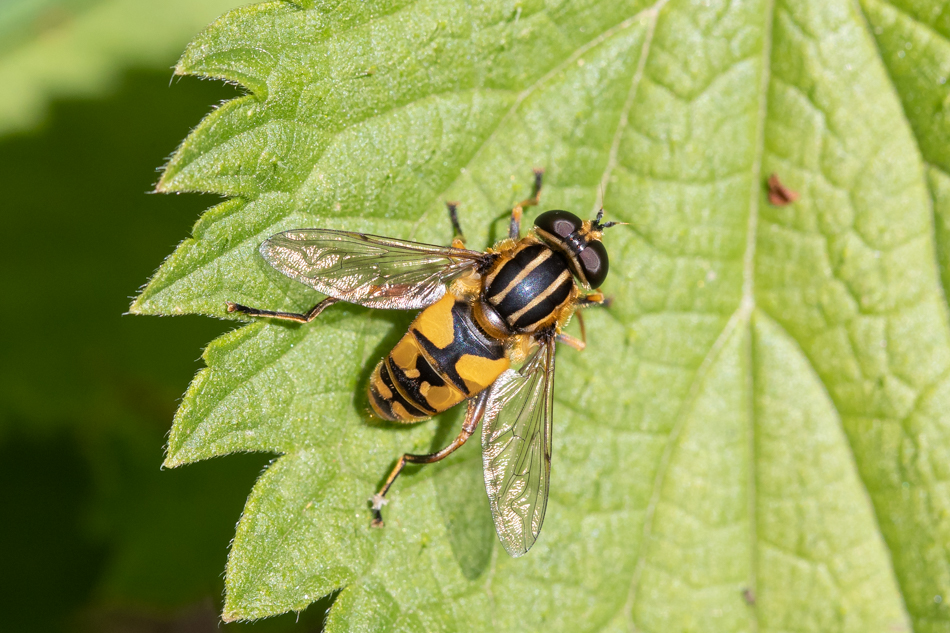
The hoverfly Platycheirus rosarum - Fishbourne, Chichester

The hoverfly Helophilus pendulus - Fishbourne, Chichester

The hoverfly Cheilosia albitarsus - Fishbourne, Chichester

The snipefly Rhagio scolopacea - Fishbourne, Chichester

On 18th May I had a short wander around Pennington Marsh, it was fairly quiet with the highlights being two male Ruff almost in summer plumage, 25 Dunlin, two Peregrine over the site, three Whimbrel, 15 Great-crested Grebe (this seemed to be a large number for a May visit) and two very late Wigeon. Numbers of migrant birds seem to be very low and I only recorded three Whitethroat and four Reed Warbler of the breeding species. Singles of Cuckoo and a Lesser Whitethroat seemed to be birds holding territory on site.

Reed Warbler - Pennington Marsh, Hampshire


Single song sequence of Reed Bunting - Pennington Marsh, Hampshire


Lesser Whitethroat - Pennington marsh, Hampshire


Sequence of Lesser Whitethroat song with a rattle to begin with followed by warbling notes - Pennington Marsh, Hampshire

Sequence of Lesser Whitethroat song starting with the rattle then a sequence of warbling notes and ending in a rattle - Pennington Marsh, Hampshire

There were high numbers of Great-crested Grebe for a May visit - Pennington Marsh, Hampshire