Showing posts with label Beaulieu Road Station. Show all posts

Tuesday, 21 February 2017

Beaulieu Road Station and Romsey - 16th February

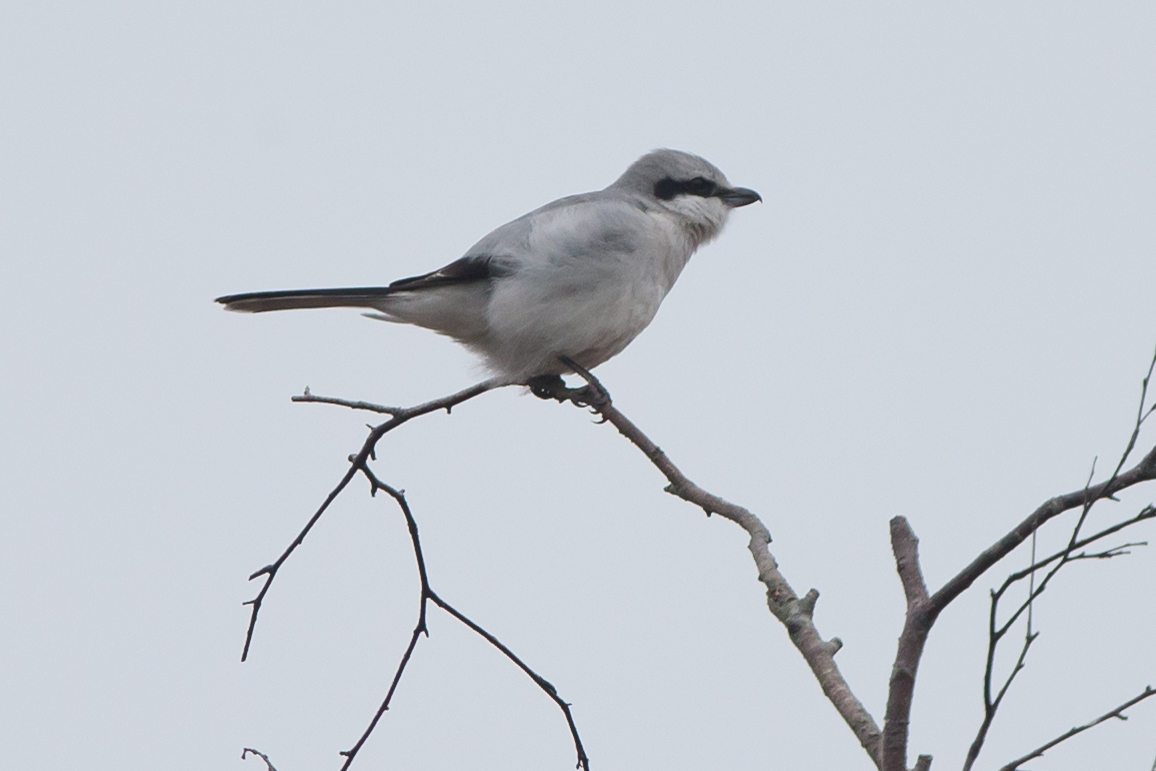
I paid a brief visit to Beaulieu road Station today in beautiful spring like conditions. There were at least two territory holding Woodlark singing along Bishop's Dyke and small groups of Siskin and Lesser Redpoll were conspicuous in the Silver Birch. The Great Grey Shrike showed rather distantly behind the main pool on Bishop's Dyke where there were also around 15 Teal in full display. These were spooked by a Marsh Harrier - the first I have seen at this site. Around the main pool there were hundreds of Common Frog in chorus - a raft of spawn had been produced measuring at least 10 square metres, I don't think I have ever seen this quantity of spawn before.

Woodlark - Bishop's Dyke, Beaulieu Road Station

Great Grey Shrike - Bishop's Dyke, Beaulieu Road Station

Marsh Harrier - Bishop's Dyke, Beaulieu Road Station

Marsh Harrier - Bishop's Dyke, Beaulieu Road Station

Back at home in Romsey two Chiffchaff were feeding on the first insects of the spring, they occasionally broke into song - spring is arriving.


Chiffchaff - Romsey

Monday, 16 May 2016

Beaulieu Road Station - 12th May

With a lovely sunny evening I was itching to get to the New Forest to see if the Nightjars had arrived so I headed off giving myself enough time to wander from the Shatterford Car Park to get to Bishop's Dyke in time for the last light. Stonechat and Dartford Warbler sang from the Heather while at least two Curlew 'bubbled' from the mires and four Snipe drummed overhead. As I got to Bishop's Dyke at least five Cuckoo were very active chasing one another in territorial dispute but the light was a little low for descent photographs despite the close views. As the sun set the sky burnt orange and mist formed over the valley mire of Bishop's Dyke. And on cue Nightjar began churring with at least four birds in the Bishop's Dyke area chasing and wing clapping frantically as they set-up territory. Two Woodcock were roding overhead and completed a great and atmospheric couple of hours.

Cuckoo - Bishop's Dyke

Mandarin pair in the mist - Bishop's Dyke

Cuckoo at sunset - Bishop's Dyke


Cuckoo showing the distinctive silhouette with raised tail and drooped wings
when calling - Bishop's Dyke

Bishop's Dyke at dusk

Bishop's Dyke at dusk

Bishop's Dyke at dusk

Nightjar - Bishop's Dyke

Nightjar churring from Scot's Pine - Shatterford

Sunday, 20 March 2016

Beaulieu Road Station, New Forest - 18th March

I have had little success with the regular Beaulieu Road Station/Pig Bush area Great Grey Shrike this winter with a least three unsuccessful attempts. This despite many reports of the bird showing well often to the east of the railway line. So, it was pleasing that with an hour to spare before a bird survey I ran into the bird fairly quickly on 18th March at Bishop's Dyke. The bird was conspicuous perching atop a very tall Silver Birch and as I approached I realised that the bird was in full song and therefore presumably a male. At a distance I heard a very harsh grating call from the bird, identical to this call here, which appears to be an alarm call. At closer range the song could be heard and was very similar to the form of the song that can be heard here, this is often described as an early season/pre-breeding song. I watched the bird for at least 15 minutes before it headed north across the heathland and as I walked back towards the car a little later the bird had travelled almost as far as Denny Wood and was now perching on low bushes and clearly in hunting mode.

Great Grey Shrike in song, note the small tooth near the bill tip - Bishop's Dyke

Great Grey Shrike - Bishops Dyke

Great Grey Shrike in song - Bishops Dyke

Also at the Shatterford/Bishops Dyke area were six Stonechat, four Siskin, two Redpoll and seven Crossbill while Curlew bubbled from the bogs and Lapwing displayed overhead.

Male Stonechat - Shatterford

Tuesday, 19 May 2015

Beaulieu Road Station and Stockbridge Down - 13th May

Having finished a survey a little earlier than thought I decided to head to Beaulieu Road Station for a short walk before heading to the office. It was a beautiful warm mid-May morning, just when the New Forest is at its best. Dartford Warbler were conspicuous and in full song and on the path from Shatterford Car Park south to Bishops Dyke two males were in full song amongst the Gorse and Heather.  

Dartford Warbler (Male) - Beaulieu Road Station

Dartford Warbler (same bird as above)

There were three pairs of Stonechat between the Shatterford Car Park and Bishop's Dyke and all had at least three fledged chicks as a result the adults, and especially the males, were defensive and followed me with their harsh chacking. While there were at least two bubbling Curlew and two pairs of Lapwing I was a little concerned not to hear any drumming Snipe, a sound that is usually typical of this site in the spring.

Stonechat (Male)

Through the scattered trees that line Bishop's Dyke the distinct 'chipping' of Crossbill could be heard from the Larch and Scot's pines and eventually at least three adult male, five female and 10 juvenile were seen although all were rather distant in the tree-tops. There were at least three singing male Redstart here and again the birds were mostly frequenting the tree tops, their stunning plumage contrasting against the blue sky of the morning. I had a quick coffee in Denny Wood where other than a Cuckoo singing amongst the Birch little was to be seen - even the Redstart were remarkably quiet presumably settled into breeding.

Crossbill - Male in Larch

Redstart - Male

Cuckoo in Birch at Denny Wood

With an hour or so to spare I decided to head to Stockbridge Down, one of my old butterfly'ing haunts, to catch-up with some spring species. Stockbridge Down is a fantastic site with a good diversity of butterfly species as well as picking-up a few migrant birds. I parked in the lower car park and walked along the track running parallel with the road and then over the road to the fantastic flower-rich meadow with abundant Cowslip. Below are the highlights of my short stop, in addition a single Pearl-bordered Fritillary was seen, a species I have not seen at this site previously.

Small Heath - Two were seen and both appeared freshly emerged

Dingy Skipper - Approximately 15 seen, most were again very fresh

Dingy Skipper - Feeding on its larval foodplant, Horseshoe Vetch

Grizzled Skipper - Just one seen

Duke of Burgundy - The prize species with at least six seen

Duke of Burgundy showing the underside of the wings

Duke of Burgundy belongs to the 'Metalmarks' a family with distinctive metallic markings, in this image the metallic bluish of the base of the forewing can be seen