Showing posts with label Cirl Bunting. Show all posts

Thursday, 1 April 2021

Odds and Ends from the 1st Quarter of 2021

Through this horrendous Covid-19 pandemic I have been fortunate in being able to continue to work and to travel for my work. During this time I have managed to make a few short detours to see a few birds. However, during this time I decided to cease posting on this blog, now that April is here and the Country is slowly easing out of lock-down I am planning to revive my posts. Here are some images from the very end of 2020 and into 2021.

Northern Mockingbird - I headed down to Exmouth for this bird at the end of March, not the best of twitches having to stand on a ladder and peer into someones garden.

Cirl Bunting - After the Mockingbird I headed to Labrador Bay RSPB Reserve where around 15 Cirl Bunting showed well

Baikal Teal - A short diversion during the school run got me this very wary bird at Sopley in Hampshire.

Garganey - Some time at Pennington Marsh either side of school drop off produced this fine male at the end of March

Dusky Warbler - I had great views of this bird at Siddington, Gloucestershire in early March

Grey Phalarope - School drop off also produced this bird at Pennington Marsh at the end of February

Bufflehead - I made a short visit for this bird at Lee Marston Lakes at the end of February

Dipper - A nesting pair showed well in Stroud at the end of February

Great Bustard - I dropped into see this bird in Oxfordshire from the Salisbury release programme 
in early March

Little Bunting - Showed well at Thursley Common in December

Rustic Bunting - A visit to Thursley Common in December produced good views after a long wait

Wednesday, 30 January 2019

Labrador Bay RSPB Reserve, Teignmouth - 30th Januray

On a cold and snowy late-January day I headed down to Devon for a brief survey, knowing that the drive would be almost six hours return and with some time to spare I headed to look for Cirl Bunting at the RSPB's reserve at Labrador Bay. The reserve is located on a beautiful stretch of Devonshire coastline a few miles south of Teignmouth and, as well as being picturesque, is home to a thriving population of Cirl Bunting, a bird I have not seen in the UK for a good few years. I arrived on site at just gone 10:00 and after a short walk encountered my first flock of around 25 Cirl Bunting feeding in a weedy field. A short way on I came across another, similar sized, but more confiding flock and spent an hour or so with this flock enjoying the stunning males and subtle females as they fed in the weedy fields at this beautiful reserve. All too soon it was time to head off to do a bat survey at a demolition site - a marked contrast to Labrador Bay.

Cirl Bunting (male) - Labrador Bay RSPB Reserve, Teignmouth, Devon

Cirl Bunting (male) - Labrador Bay RSPB Reserve, Teignmouth, Devon

Cirl Bunting (female) - Labrador Bay RSPB Reserve, Teignmouth, Devon

Cirl Bunting (male) - Labrador Bay RSPB Reserve, Teignmouth, Devon

Cirl Bunting (female) - Labrador Bay RSPB Reserve, Teignmouth, Devon

Cirl Bunting (male) - Labrador Bay RSPB Reserve, Teignmouth, Devon

Cirl Bunting (male) - Labrador Bay RSPB Reserve, Teignmouth, Devon

Cirl Bunting (male) - Labrador Bay RSPB Reserve, Teignmouth, Devon

Chaffinch (male) - Labrador Bay RSPB Reserve, Teignmouth, Devon

Labrador Bay RSPB Reserve, Teignmouth, Devon

Labrador Bay RSPB Reserve, Teignmouth, Devon

Interpretation Board - Labrador Bay RSPB Reserve, Teignmouth, Devon

Monday, 26 January 2015

Extremadura - 18th January (Day 3 of 4)

We awoke at 06:30 to rain as was forecast despite the doubts we had of the accuracy of the forecast of rain the evening before. After a quick breakfast we headed out and drove north back through Monfrague National Park to Navaconcejo where we stopped at the Rio Jerte for Dipper here in Extremadura of the race 'aquaticus'. After a bit of scanning we eventually picked up a bird feeding on rocks in the middle of the river, after driving parallel with the river a short way we eventually got good views as it sang and fed in the middle of the river although it was still a little dark and murky for a decent photograph. We then headed up over the pass through the Tras la Sierra (Extremaduran Gredos) towards the pass at Puerto de Honduras where Ricardo had a site for our main target, Iberian Green Woodpecker and also for Citril Finch, but as we climbed the snow became thicker until we decided that the road was not going to be passable so after reversing some distance back down the road as it was too narrow to turn we headed back through Navaconcejo and took the lower pass via Puerto de Cabezabellosa. We then drove up the highway to the forest at Hervas where eventually after almost three hours on the road we reached our destination. We parked at the end of a rough track and walked through the very English like landscape consisting of small pastures and woodland blocks. The woodland here was dominated by ash, poplar and oak and it was not long before we heard the familiar yet noticeably high pitched 'yaffle' call of Iberian Green Woodpecker. After much scanning and playback I eventually picked the bird up rather distantly feeding on the ground, it looked fairly similar to 'our' Green Woodpecker but with less black on the face, and seemingly more green washed underparts. We tried to get closer views but to no avail. Other birds here were Nuthatch, Cirl Bunting, Iberian Azure-winged Magpie, Rock Bunting, Long-tailed Tit of the race 'irbii' and Serin.

Dipper of the race 'aquaticus', one of the black-bellied races at Navaconcejo
Snow bound road on way to pass at Puerto de Honduras
Habitat at Hervas. Iberian Green Woodpecker was the target here and was seen foraging in the meadow and calling from the ivy clad Poplars at the left side of this image.
Long-tailed Tit of the race 'irbii' with grey rather than pinkish scapulars at Hervas
Male Cirl Bunting at Hervas

We then headed back south on the E-803 highway but cut off at La Granja and passed through Tierras de Granadilla. This was an area of arable fields and holm oak studded pasture which we simply drove through with occasional stops but which yielded several hundred Common Crane, many White Stork, a roost of nine Stone Curlew, Thekla Lark and many of the other now familiar roadside birds. 

Flock of Common Crane at Tierras de Granadilla
Common Crane at Tierras de Granadilla
A stop at a pool at Fresnedillas produced several Crag Martin, Wigeon, 
Shoveler and Great White Egret
Thekla Lark at Tierra de Granadilla
White Stork were by now a familiar site nesting on a range of elevated structures

We then headed for the rice fields at El Batan. This rather unattractive area, consisting of flooded fields used for rice production and seemingly derelict factory farm buildings, was nonetheless very birdy. Our first stop at a flooded rice field pool produced Ruff, Greenshank, many Snipe, Green Sandpiper and a Lesser Yellowlegs which showed well and has been present since November. A Bluethroat showed very well as it worked a feeding circuit around the pool and eventually approached to within 10m or so. A Water Pipit also gave similarly excellent views. We spent the rest of the day birding this area seeing many hundreds of White Stork, Sardinian Warbler, Dartford Warbler, Zitting Cisticola, Hen Harrier, Little Owl, another Bluethroat, Hoopoe, many Spanish Sparrow and small flocks of introduced Red Avadavat and Common Waxbill. 


Lesser Yellowlegs at El Batan. This adult bird has been present since November 2014
Green Sandpiper at El Batan
Bluethroat at El Batan
Little Egret at El Batan
Water Pipit at El Batan
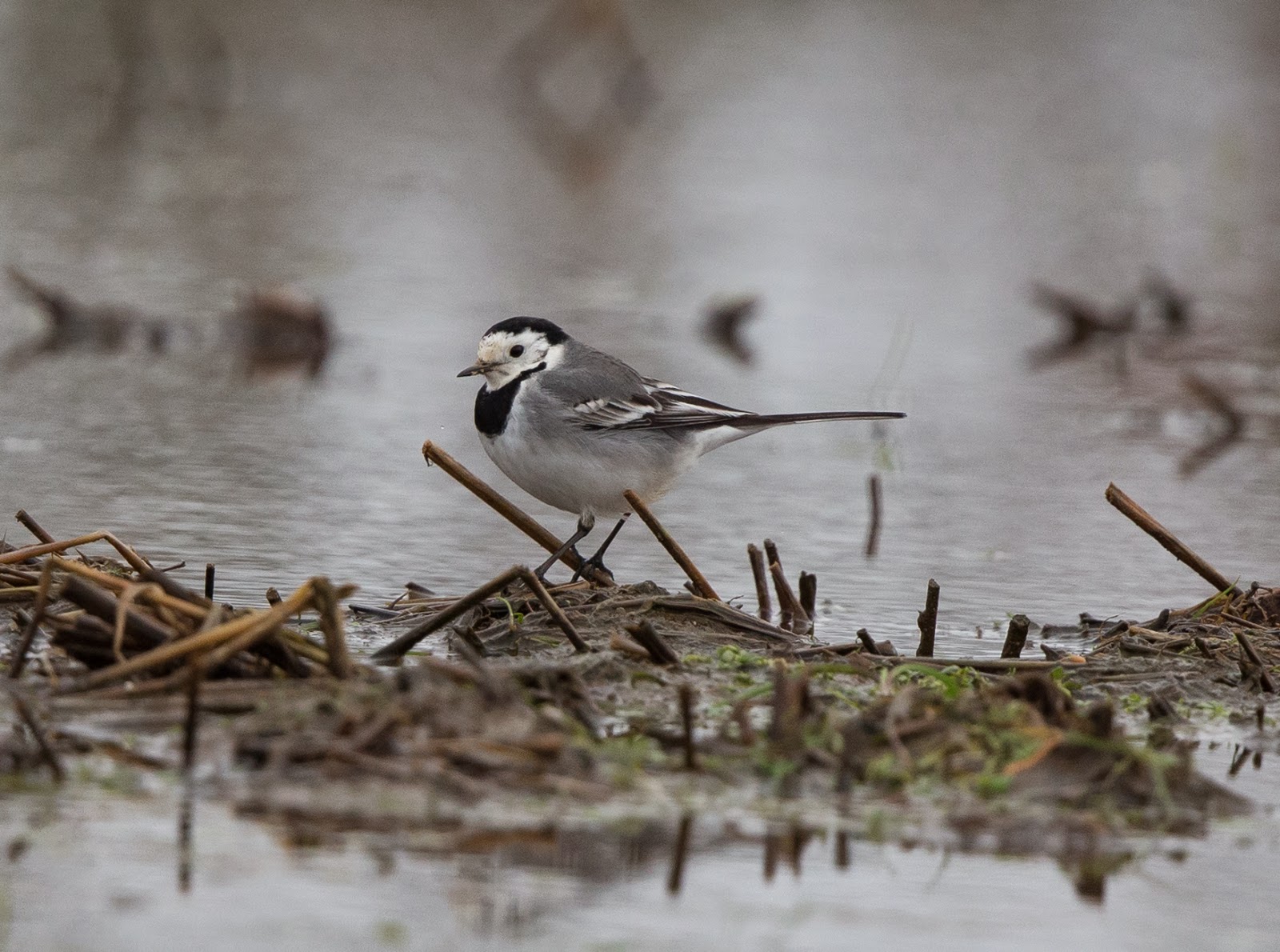
White Wagtail at El Batan
Common Waxbill at El Batan. A flock of around 20 of these smart introduced birds was present
Red Avadavat at El Batan
Male Stonechat at El Batan
Spanish Sparrow at El Batan. This is an abundant species in Extremadura
Part of a flock of around 300 White Stork at El Batan
Little Owl at El Batan
Hoopoe at El Batan


We finished the day at the rocks of Salto del Gitano in Monfrague National Park where we watched the Griffon Vultures spiralling round the cliffs and watched large flocks of Wood Pigeon pass over head to roost. We waited until after dark when, just at the last embers of light, we heard the distinctive 'whoo' of an Eagle Owl, somehow, Richardo managed to pick the bird out sitting right at the very top of Pena Falcon and through the scope the ear tufts were just visible in the darkness and at considerable distance. We headed back to the accommodation for 19:30 after another full and productive day in the field.


These are the rocks at Salto del Gitano in the Monfrague National Park. Amazingly, Ricardo picked out an Eagle Owl in near darkness at the very top of Pena Falcon, the middle peak of rocks. The birds flying around this cliff face are Grffon Vulture
Flocks of Wood Pigeon are always an impressive site

Here are the links to the other days of the trip: