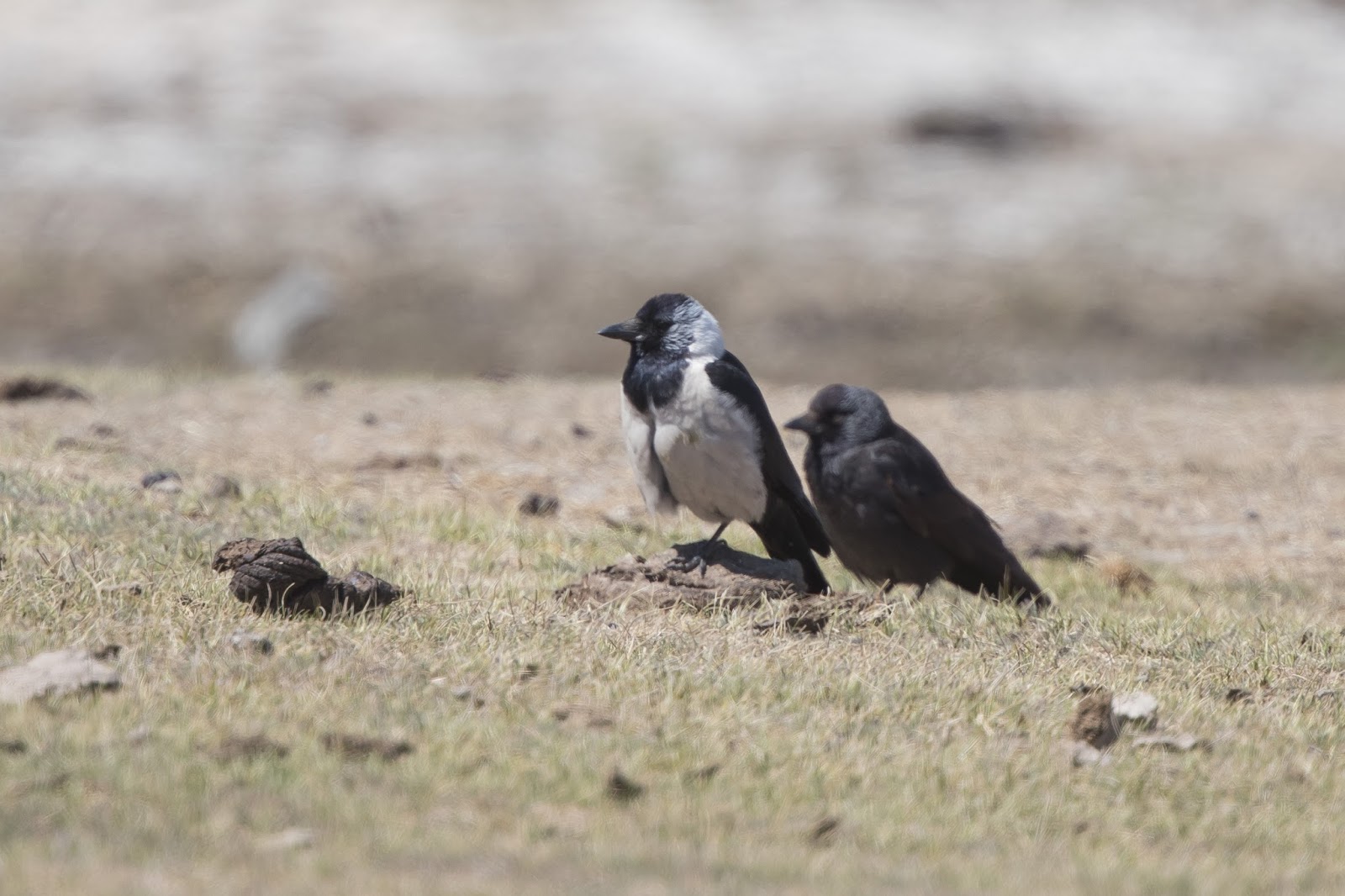
Showing posts with label Hoopoe. Show all posts

Monday, 7 May 2018

North-west China (Xinjiang) - 7th and 8th May (Day 17 and 18)

Awaking at 05:30 on 7th May I looked out of the hotel window to a scene of torrential rain, flooding and high winds. This did not bode well for our only day to Nanshan in the Tien Shan mountains – our only day here and my last day of the trip. Loading the bus at 06:00 we headed south from the city into the foothills and the rain turned to snow and as we approached our first birding site at around 1,500m this snow had reached near blizzard conditions. Our first target was Red-headed Bunting and I had seen images of this bird singing at this site in alpine meadows in beautiful sunny conditions – the weather we faced was a different kettle of fish altogether. Hopping out of the bus we were blasted by snow and a cold wind and optics quickly fogged. We birded this stretch of road for around an hour seeing small groups of finches and pipits moving south evidently trying to escape the conditions. Unperturbed were singing Sky Lark plus Water Pipit, Richard’s Pipit, Tawny Pipit and Northern Wheatear but I dipped the only tick that the group saw, a pair of Red-fronted Serin. We decided that the conditions were too grim to bird so retired to the bus for breakfast – the usual fair of bread and sweet coffee – before heading to a different area to bird. Passing along a minor road flocks of birds were in abundance but we didn’t really stop as we were heading to a key birding area. We did stop for a flock of Plain Mountain-finch beside the road and saw species such as Mistle Thrush and a possible Black-throated Thrush from the bus. Arriving at the main site some 30 minutes later conditions were so bad that we didn’t even get out of the bus to walk the trail and decided to leave for a slightly lower and more sheltered elevation. As we descended Barry spotted a redstart from the bus which he swiftly identified as an Eversmann’s Redstart, one of our key targets, but we could not relocate it after we had disembarked the bus. Driving further down the road I spotted another redstart from the bus we stopped and all piled out and there was a stunning male Blue-capped Redstart and then a male Eversmann’s Redstart quickly followed by a Black-throated Accentor all in the same clump of trees – three of our key tragets within a few minutes were seen. It soon became apparent that there were multiple birds of these species in a stretch of road of approximately 50m, these birds are normally higher in the woodlands at the site and far more difficult to see and it was clear that these birds had dropped to avoid the snow. We birded up and down the road and the numbers of these birds was incredible with 50+ of each being seen, at one point I watched 12 Black-throated Accentor feeding on the road together – Tang Jun says he normally only sees one or two of this species at the site and often struggles to see the two Redstart species. Along the road and passing overhead were also numerous Water Pipit, Tree Pipit and Godlewski’s Bunting while the bushes also held Hume’s Warbler. It was difficult to tear ourselves away from the number of birds that the scrub aloing the road held but we still had two further targets. Having seen large numbers of birds along the roadside as we headed to this area we decided to descend further and birded a village area on the way back to the Red-headed Bunting site. This produced hundreds of Pine Bunting around the village and in the fields with similar numbers of Plain Mountain-finch. Also here we recorded Red-tailed Rock-thrush, Red-tailed Shrike, Hoopoe, Horned Lark, Water Pipit, Northern Wheater and Common Stonechat of the subspecies maura. It was evident that we had dropped out of the area where the redstarts and accentors were frequenting as we saw none of these species here. Another brief look for the Red-headed Bunting drew a blank and we decided that the birds had probably descended lower to escape the snow.

After an hours lunchstop I was itching to get back into the field and with only two hours left I still wanted to see two target species. So we headed back to the main birding site and stopped in a layby. Here there were multiple Blue-capped Redstart, Eversmann’s Redstart, Black-throated Accentor and Godlewski’s Bunting which we enjoyed but our remaining target birds were not here. We headed to the main car park area, and as we approached Tang-Jun spotted a Red-mantled Rosefinch on the roadside so we leapt out of the car and quickly located two females and a male, as we watched these birds I heard a flock of serin calling and a scan produced a flock of around 25 Red-fronted Serin flying up the valley, fortunately they landed and we enjoyed reasonable, although a little distant views of these stunning little finches with their fire red foreheads. These were our two remaining targets and we had seen them within the space of a few minutes. Martin called a Rubythroat and I was amazed when I saw that it was a Himalayan Rubythroat, another new bird in the space of a few minutes and one that was not on my radar to see. There were two of these stunning birds feeding in the roadside scrub and ditches and we enjoyed good views. I had an hour before my taxi arrived to take me back to Urumqi and so we birded this area seeing more Eversmann’s Redstart, Blue-fronted Redstart and Black-throated Accentor - we were simply stunned at the number of birds present and it reminded me of a similar fall of birds that we experienced in Mongolia, see here.

At 17:00 my taxi arrived and I said goodbye to Barry, Martin, Ian, Andy D, Andy B and Volkert and drove the short distance to the airport with my local driver. We dropped out of the snow zone into rain and I arrived at the airport at just gone 18:00 for my 21:15 flight to Beijing. The lady at the check in desk informed me that the 21:15 flight had been delayed and instead managed to get me onto the 19:15 flight and by 23:00 I was in Beijing. My bags took an age to arrive and it was almost midnight by the time I left the airport. I transferred to the Eastern Airline Hotel arriving at 00:45 and enjoyed a very plush apartment room while repacking ready for my international flight tomorrow, I eventually crashed at around 02:00.

Male Eversmann's Redstart - Nanshan, Tien Shan Mountains

Male Blue-capped Redstart  - Nanshan, Tien Shan Mountains

Male Blue-capped Redstart - Nanshan, Tien Shan Mountains

Black-throated Accentor - Nanshan, Tien Shan Mountains

Pine Bunting - Nanshan, Tien Shan Mountains

Red-tailed Shrike - Nanshan, Tien Shan Mountains

Red-tailed Shrike - Nanshan, Tien Shan Mountains

Red-tailed Shrike - Nanshan, Tien Shan Mountains

Red-tailed Shrike (differenet bird to above) - Nanshan, Tien Shan Mountains

Eurasian Sparrowhawk - Nanshan, Tien Shan Mountains

 Common Stonechat of subspecies maura - Nanshan, Tien Shan Mountains

Horned Lark of subspecies brandti - Nanshan, Tien Shan Mountains

Eurasian Hoopoe - Nanshan, Tien Shan Mountains

Rufous-tailed Rock-thrush - Nanshan, Tien Shan Mountains

Rufous-tailed Rock-thrush - Nanshan, Tien Shan Mountains

Isabelline Wheatear - Nanshan, Tien Shan Mountains

Godlewski's Bunting - Nanshan, Tien Shan Mountains

Black-throated Accentor - Nanshan, Tien Shan Mountains

Tree Pipit - Nanshan, Tien Shan Mountains

Red-mantled Rosefinch - Nanshan, Tien Shan Mountains
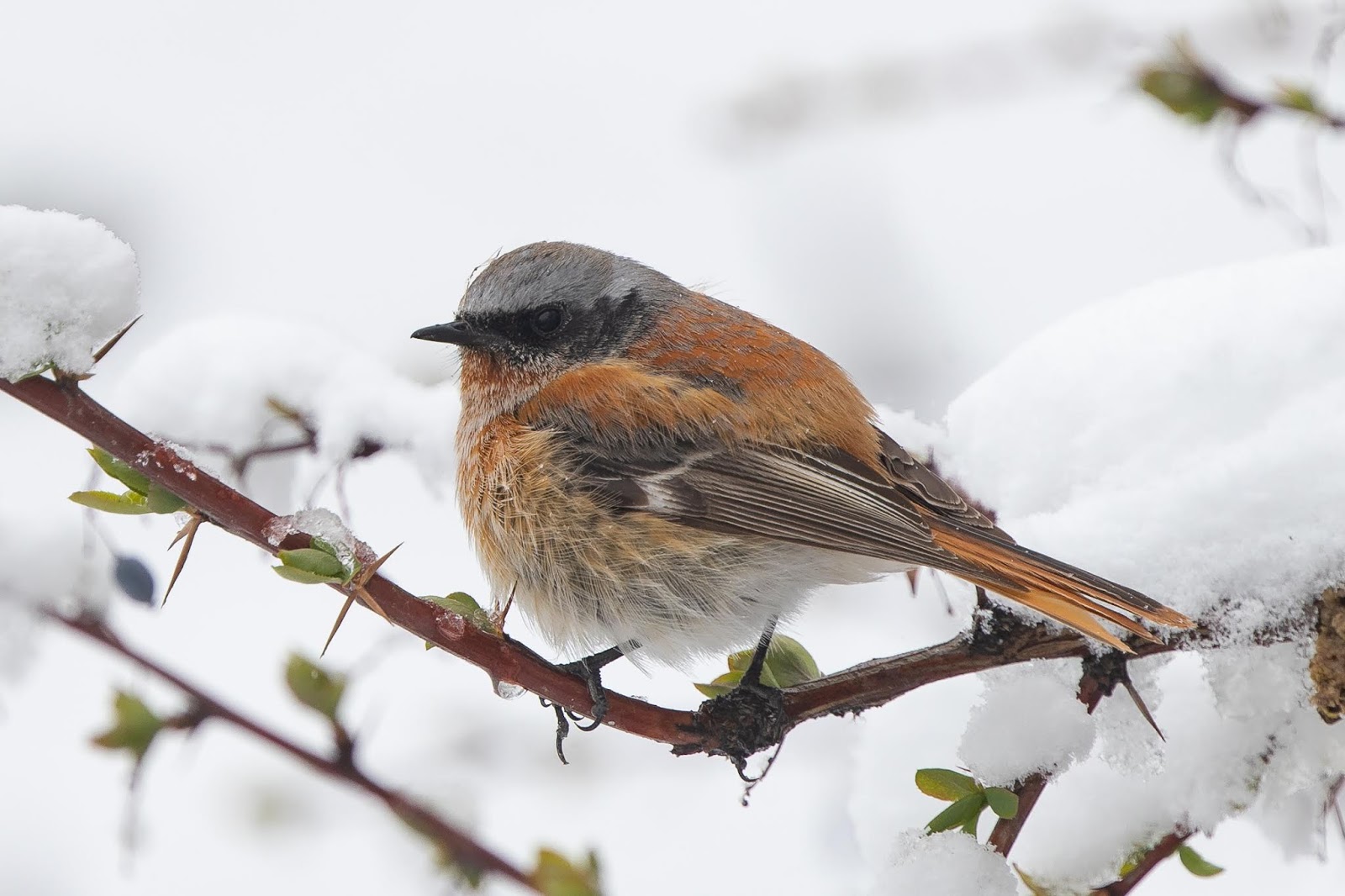
Eversmann's Redstart - Nanshan, Tien Shan Mountains

Himalayan Rubythroat - Nanshan, Tien Shan Mountains

Hamalayan Rubythroat - Nanshan, Tien Shan Mountains

Black-throated Accentor - Nanshan, Tien Shan Mountains

Black-throated Accentor - Nanshan, Tien Shan Mountains

Black Kite - Nanshan, Tien Shan Mountains

Andy B, Martin and Andy D enjoying the snow - Nanshan, Tien Shan Mountains

 Nanshan, Tien Shan Mountains

Conditions were blizzard like


Leaving Nanshan and heading back to the aiport at Urumqi

Rather sterile city scape of the new Urumqi. Most of the older buildings are being flattened to make way for these apartment blocks across the city

After a short sleep I was up at 06:00 on the 8th May and after a quick repack I was on the shuttlebus from the Eastern Airline Hotel in Beijing to the International Airport. I checked in then relaxed after some duty free shopping. My flight was delayed and we eventually departed at 11:45, 30 minutes late. Flying north-west we passed over Xinjiang and I thought of the Ground-jay’s below and then over Ullan Bataar where I had visited a little later this time last year. We headed over Russia and the Baltic before landing at Heathrow 15:15.

List of Birds Recorded in the South-east and North-west China
We recorded 322 species 34 of which were ticks for me (shown in bold). Bird of the trip for me was Cabot's Tragopan with Reeve's Pheasant, Chinese Crested Tern, Xingjiang ground-jay, Siberian Thrush, Himalayan Rubythroat, Eversmann’s Redstart and Blue-capped Redstart being up there.

Collared Partridge
Chinese Bamboo-partridge
Cabot's Tragopan
Koklass Pheasant
Elliot's Pheasant
Reeves's Pheasant
Common Pheasant
Silver Pheasant
White-headed Duck
Ruddy Shelduck
Mandarin Duck
Red-crested Pochard
Common Pochard
Tufted Duck
Garganey
Northern Shoveler
Falcated Duck
Gadwall
Eurasian Wigeon
Chinese Spot-billed Duck
Mallard
Northern Pintail
Common Teal
Little Grebe
Great Crested Grebe
Black-necked Grebe
Rock Dove
Hill Pigeon
Stock Dove
Oriental Turtle-dove
Eurasian Collared-dove
Eastern Spotted Dove
Laughing Dove
Grey Nightjar
White-throated Needletail
Edible-nest Swiftlet
Pacific Swift
House Swift
Common Swift
Greater Coucal
Lesser Coucal
Western Koel
Large Hawk-cuckoo
Oriental Cuckoo
Brown Crake
White-breasted Waterhen
Common Moorhen
Common Coot
Eurasian Spoonbill
Black-faced Spoonbill
Asian Crested Ibis
Eurasian Bittern
Black-crowned Night-heron
Green-backed Heron
Chinese Pond-heron
Cattle Egret
Grey Heron
Great White Egret
Little Egret
Chinese Egret
Great Cormorant
Pied Avocet
Black-winged Stilt
Grey Plover
Pacific Golden Plover
Little Ringed Plover
Kentish Plover
White-faced Plover
Lesser Sandplover
Greater Sandplover
Grey-headed Lapwing
Whimbrel
Little Curlew
Eurasian Curlew
Far Eastern Curlew
Bar-tailed Godwit
Black-tailed Godwit
Ruddy Turnstone
Great Knot
Red Knot
Broad-billed Sandpiper
Sharp-tailed Sandpiper
Curlew Sandpiper
Long-toed Stint
Spoon-billed Sandpiper
Red-necked Stint
Sanderling
Dunlin
Asian Dowitcher
Common Snipe
Terek Sandpiper
Common Sandpiper
Green Sandpiper
Grey-tailed Tattler
Spotted Redshank
Common Greenshank
Common Redshank
Wood Sandpiper
Marsh Sandpiper
Saunders's Gull
Black-headed Gull
Black-tailed Gull
Lesser Black-backed Gull
Arctic Herring Gull
Little Tern
Common Gull-billed Tern
Caspian Tern
Whiskered Tern
White-winged Tern
Common Tern
Chinese Crested Tern
Greater Crested Tern
Northern Boobook
Collared Owlet
Little Owl
Oriental Scops-owl
Osprey
Black Baza
Black Eagle
Booted Eagle
Eastern Marsh-harrier
Crested Goshawk
Chinese Sparrowhawk
Eurasian Sparrowhawk
Black Kite
Grey-faced Buzzard
Eurasian Buzzard
Long-legged Buzzard
Red-headed Trogon
Common Hoopoe
Oriental Dollarbird
Common Kingfisher
Black-capped Kingfisher
Great Barbet
Eurasian Wryneck
Speckled Piculet
Grey-capped Woodpecker
Great Spotted Woodpecker
White-winged Woodpecker
Pied Falconet
Common Kestrel
Red-footed Falcon
Merlin
Peregrine Falcon
Black-naped Oriole
White-browed Shrike-babbler
White-bellied Erpornis
Grey-chinned Minivet
Scarlet Minivet
Ashy Minivet
Brown-rumped Minivet
Black-winged Cuckooshrike
Black Drongo
Ashy Drongo
Hair-crested Drongo
Brown Shrike
Red-tailed Shrike
Isabelline Shrike
Long-tailed Shrike
Grey Treepie
Red-billed Blue Magpie
Asian Azure-winged Magpie
Plain-crowned Jay
Xinjiang Ground-jay
Eurasian Magpie
Common Raven
Carrion Crow
Collared Crow
Large-billed Crow
Sultan Tit
Yellow-bellied Tit
Azure Tit
Great Tit
Yellow-cheeked Tit
Chinese Penduline-tit
Hume's Lark
Horned Lark
Eurasian Skylark
Oriental Skylark
Crested Lark
Bearded Reedling
Zitting Cisticola
Yellow-bellied Prinia
Plain Prinia
Common Tailorbird
Sykes's Warbler
Black-browed Reed-warbler
Oriental Reed-warbler
Marsh Grassbird
Red-rumped Swallow
Barn Swallow
Collared Sand Martin
Chestnut Bulbul
Mountain Bulbul
Black Bulbul
Collared Finchbill
Red-whiskered Bulbul
Brown-breasted Bulbul
Light-vented Bulbul
Yellow-browed Warbler
Hume's Leaf-warbler
Pallas's Leaf-warbler
Dusky Warbler
White-spectacled Warbler
Alström's Warbler
Eastern Crowned Warbler
Chestnut-crowned Warbler
Pale-legged Leaf-warbler
Sakkalin Leaf-warbler
Hartert's Leaf-warbler
Rufous-faced Warbler
Brownish-flanked Bush-warbler
Korean Bush-warbler
Black-throated Tit
Silver-throated Tit
Lesser Whitethroat
Tarim Hill-warbler
Reed Parrotbill
Grey-headed Parrotbill
Short-tailed Parrotbill
Vinous-throated Parrotbill
Indochinese Yuhina
Black-chinned Yuhina
Japanese White-eye
Streak-breasted Scimitar-babbler
Grey-sided Scimitar-babbler
Rufous-capped Babbler
Dusky Fulvetta
Grey-cheeked Fulvetta
Chinese Hwamei
Lesser Necklaced Laughingthrush
Grey Laughingthrush
White-browed Laughingthrush
Masked Laughingthrush
Black-throated Laughingthrush
Blue-crowned Laughingthrush
Brown Dipper
Common Starling
Purple-backed Starling
Black-collared Starling
White-shouldered Starling
Red-billed Starling
White-cheeked Starling
Crested Myna
White's Thrush
Siberian Thrush
Chinese Thrush
Mistle Thrush
Eurasian Blackbird
Chinese Blackbird
Japanese Thrush
Grey-backed Thrush
Pale Thrush
Dusky Thrush
Black-throated Thrush
Oriental Magpie-robin
Grey-streaked Flycatcher
Asian Brown Flycatcher
Small Niltava
Zappey's Flycatcher
Blue-and-white Flycatcher
Siberian Blue Robin
Rufous-tailed Robin
Bluethroat
Siberian Rubythroat
Himalayan Rubythroat
White-crowned Forktail
Spotted Forktail
Blue Whistling-thrush
Yellow-rumped Flycatcher
Green-backed Flycatcher
Narcissus Flycatcher
Mugimaki Flycatcher
Eversmann’s Redstart
Blue-capped Redstart
Plumbeous Water-redstart
Daurian Redstart
Chestnut-bellied Rock-thrush
Rufous-tailed Rock-thrush
Common Stonechat
Northern Wheatear
Desert Wheatear
Spotted Elachura
Fork-tailed Sunbird
Black-throated Accentor
White-rumped Munia
Scaly-breasted Munia
Saxaul Sparrow
House Sparrow
Russet Sparrow
Eurasian Tree Sparrow
Pechora Pipit
Tree Pipit
Olive-backed Pipit
Water Pipit
Richard's Pipit
Tawny Pipit
Grey Wagtail
Citrine Wagtail
Eastern Yellow Wagtail
White Wagtail
Chinese Grosbeak
Red-mantled Rosefinch
Plain Mountain-finch
Desert Finch
European Greenfinch
Oriental Greenfinch
Common Linnet
Red Crossbill
Red-fronted Serin
Eurasian Siskin
Chestnut-eared Bunting
Godlewski's Bunting
Pine Bunting
Ochre-rumped Bunting
Pallas’s Bunting
Yellow-breasted Bunting
Little Bunting
Black-faced Bunting
Yellow-browed Bunting
Tristram’s Bunting

Links to Other Days of the Trip (Click to View)
Day 1 and 2 – International flight and Dongtai.
Day 3 - Dongtai.
Day 4 – Dongtai and Magic Wood.
Day 5 - Nanhui then fly to Fuzhou.
Day 6 - Shanutan Island and Fuzhou Forest Park.
Day 7 - Fuzhou Forest Park then Emeifeng Mountain.
Day 8 - Emeifeng Mountain.
Day 9 - Emeifeng Mountain.
Day 10 - Emeifeng Mountain then Wuyuan.
Day 11 - Wuyuan.
Day 12 – Drive Wuyuan to Dongzhai.
Day 13 - Dongzhai.
Day 14 – Dongzhai then fly Wuhan to Korlor.
Day 15 – Taklamakan Desert.
Day 16 – Taklamakan Desert then Urumqi.

Tuesday, 9 May 2017

Mongolia - Background and Day 1 and 2 - Travel Day then Mungunmorit Area

Background
I bumped into my old friend, Jon Hornbuckle, at the Bird Fair in 2016 and he mentioned that he was considering going back to Mongolia in 2017 and so I expressed my interesting in accompanying him. There are not many ticks for me in Mongolia but I was keen to see Black-billed Capercaillie, Azure Tit, Asian Dowitcher and Relict Gull at its breeding grounds. There is of course the cultural side of Mongolia and I was keen to experience this along with the open landscapes and remoteness that the country has to offer.

Most trips run around 2-3 weeks later than ours mainly to maximise the chances of seeing migrant species and increasing the chances of encountering species such as Hodgson's Bush-chat and Chinese Bush-warbler. We were keen to see Black-billed Capercaillie lekking and the standard tour dates often struggle to even get brief views of the species as it has stopped lekking, hence we opted for earlier dates. This earlier timing meant that migration had only just started, akin to birding in the UK in early to mid-April. As a result the diversity of warblers was not as high as some trips but we saw a lot more thrushes than the standard trip.

The entire trip was organised by Jon through Tumendelger Humbaa of Tum-Eco Tour:

Tum-Eco Tour
1-19, Dalan, Dalanzadgad,
Southgobi, Mongolia.
Mobile:
+976-99074355
+976-99852645
e-mail: tumen106@yahoo.com
www.wildlifemongolia.com
www.facebook.com/GobiEcoTour

My travel companions for the trip were Barry Wright, Jon Hornbuckle, Marc Brew, Rod Martins, Lorand Szucs, Richard Fairbank (http://birdingneversleeps.blogspot.co.uk) and Duncan Brooks. I had only birded with Jon and Barry previously.

Tumen provided three Toyota Landcruisers and a support vehicle for the duration, the vehicles were very good and well maintained and we had no issues with them with the exception of a single puncture. On one of the days there was another issue with one of the Landcruisers vehicle (not sure exactly what this was) but Tumen provided a temporary replacement vehicle and driver and thus we experienced no disruption to our birding. The guys in the support vehicles erected tents and cooked for us. Tumen speaks relatively little English, but enough for basic communication, his wife Oyunna speaks excellent English and helped translate. The trip went very smoothly thanks to Tumen, Oyunna and their excellent team. My only criticism would be that when we arrived at a birding site there was a lack of clear instruction as to what we were doing so that the team would scatter to bird but there was no guidance on how long we should be – this is a minor comment and one that could have easily have been resolved amongst ourselves.

We camped on a total of eight nights, the tents and sleeping bags provided by Tum-Eco Tur were of an excellent standard and kept us warm and cosy despite the often cold temperatures. I took my own sleeping bag with liner and used this while sleeping on top of the bags provided. On one night I had to get into the provided sleeping bag meaning I slept in two bags plus a liner and with a thermal top on!

I saw all the birds that I wanted to see with five notable exceptions:
  • White-backed Woodpecker – We looked for this at Terelj National Park but failed. I wasn’t convinced that Tumen knew exactly where too look for this and despite spending two sessions at his site we didn’t have a sniff.
  • Hodgson’s Bush-chat – Half of the team saw this at Barig Mountain but I was too far away and didn’t hear the shout. We also missed it at Baga Bogd because we didn’t go high enough and left the site too soon. I think we were perhaps too early to see the species and the one seen definitely gave the impression of a recently arrived migrant.
  • Altai Accentor - We missed this at Baga Bogd because we didn’t go high enough and left the site too soon.
  • Thick-billed Warbler - I think we were probably a bit too early for this species.
  • Asian Rosy-finch – We missed this at Baga Bogd because we didn’t go high enough and left the site too soon.
Weather
The weather throughout the trip was sunny and mild/warm with temperatures up to around 24c but the cool wind often meant it felt cooler. We had a few days of strong wind but with rain only on 10th May which fell as snow at higher altitudes. On 19th May the wind was very strong and we experienced a fairly significant sand storm, later that night when staying at 2,500m there was a fairly significant snow fall. The nights were cold to very cold, down to -10c.

Photography
Photography on the trip was generally hampered by two factors, firstly, the weather was mainly very sunny and there was significant heat haze from fairly early in the morning. It was light at around 06:00 until 20:00 but heat haze tended to be a significant issue from around 11:00 until 17:00. Secondly, many of the birds were present were in wetland habitats and thus birds were considerably distant this, coupled with the heat haze, often made photography difficult. 

I took with me my Canon 1DX Mark II, Canon 400mm DO Mark II and a Canon 1.4 Mark III Extender. Largely this was combination was okay but in many places I could have done with the extra reach of my 500mm but the downside of this lens is the bulk and weight. While walks were not particularly lengthy carrying the 500mm lens all day in the field can be hard work so on balance I think the 400mm was a good option. I also took with me my Swarovski ATX 80 telescope which was essential and I often birded with my scope and the camera slung over my shoulder, this would not have been possible with the 500mm lens.

Itinerary
  • 8th May (Day 1) – Travel from London Heathrow to Ulaanbaatar via Istanbul and Bishkek. 11:30-11:15, journey time of 15.5 hours
  • 9th May (Day 2) - Arrive Ulaanbaatar 11:15 birded en-route to Mungunmorit. Night camping at Mungum Sum.
  • 10th May  (Day 3) -  Birding Mungunmorit and Gachuurt area before returning to Ulaanbaatar. Night Ulaanbaatar guest house.
  • 11th May  (Day 4) - Drive from Ulaanbaatar south to Dalanzadgad (570km). Night Dalanzadgad guest house.
  • 12th May (Day 5)  – Drive to from Dalanzadgad to Gurvan Saikhan National Park. Night camping in the National Park.
  • 13th May (Day 6) - Gurvan Saikhan National Park. Night Dalanzadgad guest house.
  • 14th May  (Day 7) - Driving from Dalanzadgad to Gobi Desert driving en-route. Night camping near to Khongor Sand Dunes.
  • 15th May  (Day 8) – Driving through Gobi Desert to Bogd with night camping beside Orog Lake.
  • 16th May  (Day 9) - Drive up Baga Bogd Mountain and birding until early afternoon, then drive to Kholboolj Lake. Night camping beside Kholboolj Lake.
  • 17th May  (Day 10) - Birding around Kholboolj Lake early AM then drive to Barig Mountain. Birding PM at Barig Mountain. Night camping at Barig Mountain.
  • 18th May  (Day 11) - Early AM birding at Barig Mountain then drive to Sangiin Lake. Night camping beside Sangiin Lake.
  • 19th May  (Day 12) - AM birding at Sangiin Lake then onto Bayan Lake. Drive to Hustai National Park with night in research centre in the park.
  • 20th May  (Day 13) - Morning birding Hustai National Park then drove to Terelj National park. Night in Ulaanbaatar 2 Hotel at Terelj National Park.
  • 21st May  (Day 14) - Morning birding at Terelj National Park then drove to Gachuurt area. Night camping at Gachuurt area.
  • 22nd May  (Day 15) - Morning birding at the Gachuurt area then drove to Ulaanbaatar stopping to bird willow scrub along Tuul River. Night in Mongolica Hotel, Ulaanbaatar.
  • 23rd May  (Day 16) - International flight from Ulaanbaatar to London Heathrow at 11:15 via Bishkek (Kyrgyzstan) and Istanbul arriving in London at 22:30.

This was our route as originally proposed, there were some tweaks later in the trip but essentially the above depicts our route. The north-east extension early on was for lekking Black-billed Capercaillie

8th - 9th May – Travel from London to Ulaanbaatar
After a sleepless night I awoke at 05:45 on 8th May gathered my baggage, said my farewells to Sarah and Tobias and headed up the M3 to Heathrow Terminal 2. After checking in I met up with Barry Wright and had a quick catch-up before I headed for a breakfast in the Lufthansa lounge. Our Turkish Airlines flight was due to depart at 11:30 but eventually we left at 12:50 due to a delayed inbound flight as a result of increased security measures. We headed south-west over Europe over Amsterdam, Prague and Budapest before landing in Istanbul at 18:00 (duration 3 hours 10 minutes), Istanbul being two hours ahead of UK time. The transfer across the airport to the gate for our next flight was somewhat hurried but we arrived just as the last passengers were boarding. Our flight to Bishkek in Kyrgyzstan departed at 19:45 around 30 minutes late and as we taxied along the runway I added Yellow-legged Gull, Hooded Crow, Jackdaw and Alpine Swift to my non-existent Turkish list. There were several hundred Alpine Swift buzzing low over the runway and I assumed they nested in the adjacent buildings, the city of Istanbul flanking the runway. We headed east over the Black Sea, skirting along its southern shore, before heading over the raptor hotspot of Batumi, across the Caspian Sea, into Kazakhstan skirting around the north of the Aral Sea before dropping down into Bishkek landing at around 03:30 local time. We left Bishkek at around 05:00 and flew north-east over the north-west corner of China before landing in Ulaanbaatar at 11:15 on the morning of the 9th May a total journey time of 15.5 hours.

The Mongolian landscape as we approached Ulaanbaatar 

The Mongolian landscape as we approached Ulaanbaatar 

Ulaanbaatar just prior to landing, the Tuul River and its vegetated flood plain is a 
significant feature of the city 

After arrival in Ulaanbaatar we met with Tumen and his team and loaded our bags into the three vehicles seeing a few first birds of the trip including Redpoll and Grey Wagtail before heading onto the streets of the city. We drove through a mix of Gers and modern apartment blocks before quickly running into a traffic jam. As we sat bumper to bumper we saw a few birds in the town including Chough, Northern Wheatear, Goosander, Rook, Raven and Black Kite. After emerging from the town we quickly found our first birding spot, a lake nestled in the vast grassy expanses which stretch away from the city. We scanned the lake picking up a range of familiar species including Shoveler, Tufted Duck, Wigeon, Garganey, Teal, Pintail, Whooper Swan, Green Sandpiper, Common Sandpiper, Little Ringed Plover, Marsh Sandpiper and a pair of less familiar Swan Goose and six Demoiselle Crane. Isabelline Wheatear displayed from telegraph poles while overhead were Steppe Eagle and Cinereous Vulture. Flocks of fabulous piebald Daurian Jackdaw picked over the cow dung with equal numbers of Chough. A lady in a Ger adjacent to the lake seemed a little irate with our presence and the sound of Mongolian shouting somewhat spoiled the atmosphere. Onwards and past an imposing silver statue of Gengis Khan which surveyed the landscape we stopped at a second lake and here added Citrine Wagtail, White Wagtail of the race ocularis, Greylag Goose and Black-winged Stilt.

Adult and immature Daurian Jackdaw, the species passes through the area in large numbers in the spring and only small numbers winter. The species was particularly common around Ulaanbaatar and we saw very few away from the grasslands surrounding the city - Ulaanbaatar

Marsh Sandpiper and a single Redshank - Ulaanbaatar

Black-eared Kite - Ulaanbaatar

The Genghis Khan Equestrian Statue was erected in 2008 and is a 40 metre tall statue of Genghis Khan on horseback, on the bank of the Tuul River at Tsonjin Boldog where according to legend, he found a golden whip. The statue is pointed east towards his birthplace. Visitors walk to the head of the horse through its chest and neck, where they have a panoramic view.

Genghis Khan Equestrian Statue 

Our next stop was a far larger lake, Halaikh Lake as we approached we had good views of Hoopoe, Mongolian Lark, Horned Lark and Taiga Flycatcher. Halaikh Lake was a beautiful blue lake set within the barren grasslands of the Mongolian landscape and here our team had set-up a pic-nic table with our lunch. First though we wandered to the lake shore and it was teaming with birds, large numbers of Ruddy Shelduck, Tufted Duck, Wigeon, Pochard and Pintail while amongst these were smaller numbers of Slavonian Grebe (4), Black-necked Grebe (4), Demoiselle Crane (c.45), Bar-headed Goose (1), Smew (2) and the stars of the show a minimum count of 32 Stejneger’s Scoter, the males displaying avidly to the females and showing their fabulous upswept white mascara line. A 1st winter Naumann's Thrush showed well along the shoreline while the surrounding grassland held more Mongolian Lark and Asian Short-toed Lark.

Taiga Flycatcher - Halaikh Lake

Taiga Flycatcher - Halaikh Lake

Hoopoe - Halaikh Lake

Raven of race kamtschaticus - Halaikh Lake

1st winter Naumann's Thrush - Halaikh Lake

1st winter Naumann's Thrush - Halaikh Lake

Naumann's Thrush, Little Ringed Plover and Common sandpiper - Halaikh Lake

Stejneger's Scoter - Halaikh Lake

Male and female Stejneger's Scoter - Halaikh Lake

Ruddy Shelduck and Demoiselle Crane - Halaikh Lake

Demoiselle Crane - Halaikh Lake

Lunch beside Halaikh Lake

Dust devil at Halaikh Lake

We drove onwards eventually heading off-road to our campsite at Mungunmorit on the eastern edge of the Gorkhi Terelj National Park. On the way we stopped at an area of scrub where Long-tailed Rosefinch (1) and Pine Bunting (at least 15) were new birds. Bumping and bouncing across the grasslands we eventually reached the edge of the Taiga Forest where we set-up tent in fading light and gathered in the food tent for soup and noodles and a deserved Mongolian beer.

Pine Bunting - Mungunmorit Area

Pine Bunting - Mungunmorit Area

Mungunmorit Area

Our very cold campsite at Mungunmorit

Links to Other Days of the Trip (Click to View)
Day 3 -  Mungunmorit and Gachuurt area
Day 4 - Drive to Dalanzadgad
Day 5  – Gurvan Saikhan National Park
Day 6 - Gurvan Saikhan National Park
Day 7 - Gobi Desert and Khongor Sand Dunes
Day 8 – Gobi Desert to Bogd
Day 9 - Baga Bogd Mountain and Kholboolj Lake
Day 10 - Kholboolj Lake and Barig Mountain
Day 11 - Barig Mountain and Sangiin Lake
Day 12 (Part 1) - Sangiin Lake and Bayan Lake
Day 12 (Part 2) - Sangiin Lake and Bayan Lake
Day 13 - Hustai National Park and Terelj National Park
Day 14 - Terelj National Park and Gachuurt Area
Day 15 and 16 - Gachuurt Area, Tuul River and International flight